Monday, August 3, 2020

Hymn of the Supreme Support

Of the thousands of hymns of the Vedas, a few stand out as unique, most rarefied. These hymns also demonstrate that the composers, the Maharishis, were not pastoral nomads, but men and women of extraordinary realization. Their yajnas were not just external fire rituals, but they also kindled the fire of consciousness deep within. The Purusha Sukta, the Nasadiya Sukta, the Rudradhyaya, and the Hiranyagarbha Sukta, to name a few, are all examples of such exalted hymns. Volumes could be written on these suktas, which are but upanishads without so classifying. Another such magnificent hymn is the Skambha Sukta from the Atharvaveda, the most mysterious and misunderstood of the Vedas. 

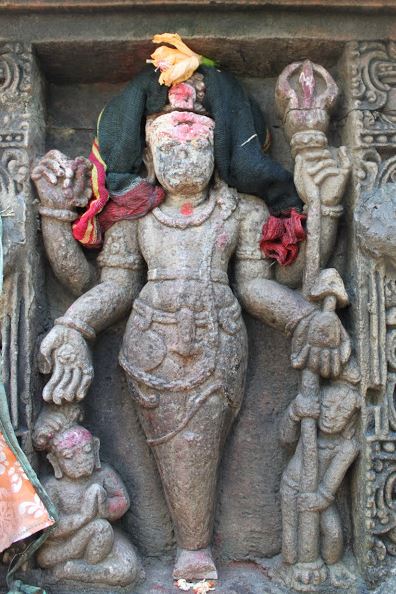
While the Rigvedic hymn glorifies the Divine as Purusha, the Cosmic Person, who was sacrificed to bring about creation, the Atharvaveda glorifies the Divine as the Skambha, the Pillar of Creation. The Skambha is the singular support unto which all this is based, the substratum of all existence, the primoridial cause of all, the singular source of all Devas. The Skambha, the Pillar of Light, is the center of the manifest universe, the axis mundi, the Dispeller of all darkness, the One on whom all the compass points converge. The Shambha is both known, and at the same time, unknowable. It is both Being and Nonbeing; it is verily the Supreme Brahman. It is the end of all pursuits, all knowledge. S/he who knows that the highest Being, the Lord of Life, also intuitively knows that Supreme Support, the fulcrum of existence. 

In later literature, this Pillar of Light is called the Jyotirlinga or Lingodbhava Murti, the primordial formless form of Shiva that first manifest in front of the great Devas, who couldn't but find the ends of it. It speaks to His immeasurable existence, the infinitude of Paramashiva. This same form is also understood to be Aja Ekapada, the Unborn One-Footed. For from the one limb, says the hymn, the world was fashioned; in the one limb, all the great Devas are affixed. The rest remains beyond, transcendental, unmanifest, pure Prakasha (vide: Purusha Sukta, mantra 4). 

Aum Namah Shivaya.
-----

Skambha Sukta

Atharvaveda X.7.1-44

In which of His limbs does Fervor dwell?
In which of His limbs is Order set?
In what part of Him abides Constancy, Faith?
In which of His limbs is Truth established?
From which of His limbs does Fire shine forth?
From which of His limbs issues the Wind?
Which limb does the Moon take for measuring rod
when it measures the form of the great Support?

In which of His limbs does the Earth abide?
In which of His limbs the atmosphere?
In which of His limbs is the sky affixed?
In which of His limbs the great Beyond?

Toward whom does the rising Flame aspire?
Toward whom does the Wind eagerly blow?
On whom do all the compass points converge?
Tell me of that Support--who may He be?

Where do the half-months and months together
proceed in consultation with the year?
Where do the seasons go, in groups or singly?
Tell me of that Support--who may He be?

Toward whom run the sisters, day and night,
who look so different yet one summons answer?
Toward whom do the waters with longing flow?
Tell me of that Support--who may He be?

The One on whom the Lord of Life
leaned for support when He propped up the world--
Tell me of that Support--who may He be?

That which of all forms the Lord of Life
created--above, below, and in between--
with how much of Himself penetrated the Support?
How long was the portion that did not enter?

With how much of Himself penetrated the Support
into the past? With how much into the future?
In that single limb whose thousand parts He fashioned
with how much of himself did He enter, that Support?

Through whom men know the worlds and what enwraps them,
the waters and Holy Word, the all-powerful
in whom are found both Being and Nonbeing--
Tell me of that Support--who may He be?

By whom Creative Fervor waxing powerful
upholds the highest Vow, in whom unite
Cosmic Order and Faith, the Waters and the Word--
Tell me of that Support--who may He be?

On whom is firmly founded earth and sky
and the air in between; so too the fire,
Moon, Sun, and wind, each knowing His own place--
Tell me of that Support--who may Hebe?

In whose one limb all the Gods,
three and thirty in number, are affixed--
Tell me of that Support--who may He be?

In whom are set firm the firstborn Seers,
the hymns, the songs, and the sacrificial formulas,
in whom is established the Single Seer--
Tell me of that Support--who may He be?

In whom, as Man, deathlessness and death combine,
to whom belong the surging ocean
and all the arteries that course within him;
Tell me of that Support--who may He be?

Of whom the four cardinal directions
comprise the veins, visibly swollen,
in whom the sacrifice has advanced victorious--
Tell me of that Support--who may He be?

Those who know the Divine in man
know the highest Lord; who knows the highest Lord
or the Lord of Life knows the supreme Brahman.
They, therefore, know the Support also.

He whose head is the Universal Fire,
who has for His eyes the Angirases
and for His limbs the practitioners of sorcery--
Tell me of that Support--who may He be?

He whose mouth, so they say, is Brahma,
whose tongue is a whip steeped in honey,
of whom Viraj is considered the udder--
Tell me of that Support--who may He be?

Out of His body were carved the verses,
the formulas being formed from the shavings.
His hairs are the songs, His mouth the hymns
of the Seers Atharvan and Angiras--
Tell me of that Support--who may He be?

The branch of Nonbeing which is far-extending
men take to be the highest one of all.
They reckon as inferior those who worship
your other branch, the branch of Being.
In whom the Adityas, Rudras and Vasus,
are held together, in whom are set firm
worlds--that which was and that which shall be--
Tell me of that Support--who may He be?

Whose treasure hoard the three and thirty Gods
forever guard--today who knows its contents?
Tell me of that Support--who may He be?

In whom the Gods, knowers of Brahman,
acknowledge Brahman as the Supreme--
he who knows the Gods face to face
is truly a Knower, a Vehicle of Brahman.

Great are the Gods who were born from Nonbeing,
yet men aver this Nonbeing to be
the single limb of the Support, the great Beyond.

The limb in which the Support, when generating,
evolved the Ancient One--who knows the limb
knows too by that same knowledge the Ancient One.

It was from His limb that the thirty-three Gods
distributed portions among themselves.
Thus in truth only knowers of Brahman
are also knowers of the thirty-three Gods.

Men recognize the Golden Embryo
as the unutterable, the Supreme.
Yet it was the Support who in the beginning
poured forth upon the world that stream of gold.

In the Support the worlds consist; in Him
Creative Fervor and Order have their ground.
You I have known, O Support, face to face,
in Indra wholly concentrated.

In Indra the worlds consist; in Indra
Creative Fervor and Order have their ground.
You I have known, O Indra, face to face,
in the Support wholly established.

Before dawn and sunrise man invokes
name after name. This Unborn sprang to birth
already with full sovereignty empowered.
Than He nothing higher ever existed.

Homage to Him of whom the Earth is the model,
the atmosphere His belly, who created the sky
from His head. Homage to this supreme Brahman!

Homage to Him whose eye is the Sun
and the Moon which is ever renewed, whose mouth
is the Fire. Homage to this supreme Brahman!

Homage to Him whose in-breath and out-breath
is the wind, whose eyes are the Angirases,
whose wisdom consists in the cardinal points.
Homage once again to this supreme Brahman!

By the Support are held both heaven and earth,
by the Support the broad domain of space,
by the Support the six divergent directions,
by the Support is this whole world pervaded.

Homage to Him who, born of labor
and Creative Fervor, has entered all the worlds,
who has taken Soma for His own exclusive possession.
Homage to this Supreme Brahman!

How does the wind not cease to blow?
How does the mind take no repose?
Why do the waters, seeking to reach truth,
never at any time cease flowing?

A mighty wonder in the midst of creation moves,
thanks to Fervor, on the waters' surface.
To Him whatever Gods there are adhere
like branches of a tree around the trunk.

To whom the Gods always with hands and feet,
with speech, ear, and eye bring tribute unmeasured
in a well-measured place of sacrifice.
Tell me of that Support--who may He be?

In Him exists no darkness, no evil.
In Him are all the lights, including the three
that are in the Lord of Life. The one who knows
the Reed of gold standing up in the Water
is truly the mysterious Lord of Life.

Monday, July 27, 2020

Teaching of Upamanyu

Today we read from the oldest part of Shiva Purana, a large book of two parts called the Vayaviya Samhita/वायावीय संहिता. The Vayaviya Samhita is an ancient recension of the Vayu Purana that was built upon to form the massive Shiva Purana. The entire book then is a narration of Vayu. Within this book the Sage Upamanyu and his teachings are prominent. Sage Upamanyu, like Shvetashvatara, Tandi, Durvasa and many other illustrious ancients were Vedic rishis and Pashupata ascetics par excellence. 

Here, Upamanyu instructs his disciple, Krishna Vasudeva, on the meaning of the five-syllable (panchakshara) mantra, Namah Shivaya. As we know, appended with the seed syllable OM (AUM), it becomes with six-syllable (shadakshara) mantra. The two terms are used interchangeably. Sage Upamanyu recounts a dialogue between Shiva and Shakti on the meaning of this mantra. The divine sage tells Krishna Vasudeva that the mantra OM Namah Shivaya is the essence of all essences, the very meaning of all the Vedas, Agamas and scriptures. The mantra is the expression and Shiva is the expressed. The mantra is Shiva Himself! It is the means to Shiva consciousness, the means for release from the ocean of samsara. 

Let us then, without further ado, imbibe from the teaching of Upamanyu.

Aum Namah Shivaya. 
----
Krishna said:
O omniscient excellent sage, ocean of all knowledge, I wish to hear precisely about the glory of the five-syllable mantra.

Upamanyu said:
It is impossible to explain in detail the glory of the five-syllable mantra even in hundreds of crores of years. Hence, hear it in brief:

The six-syllable mantra is found in the Vedas and the Shiva Agamas. It facilitates the understanding of all topics by the devotees of Shiva. It consists of very few syllables, but is pregnant with meaning. It is the essence of the Vedas and it is conducive to salvation. This expression of auspicious nature is devoid of doubts. It is achieved by the order of Shiva; it is attended by many siddhis. It is divine and delightful to the mind. This expression of Lord Shiva is majestic and decisive in meaning.

The omniscient Lord Shiva spake the mantra OM Namah Shivaya for the acquisition of all topics and meanings by the embodied beings since it can be easily uttered by the mouth. The first mantra [OM] that makes up the six syllables is the seed of all lores. It is very subtle, but serves a great purpose. It is like the seed of the banyan tree. The omniscient Lord, the Creator of everything, that all-pervasive Shiva, who is beyond the three attributes [gunas] is stationed in the single-syllable mantra, OM. The five subtle Brahmans [Panchabrahma] are stationed in the mantra Namah Shivaya occupying one syllable each. Thus in the six-syllable subtle mantra, Shiva in the form of the Panchabrahma is stationed in the way of the expressed and the expressive. Shiva is expressed and the mantra is expressive of Him. The state of being the expressive and the expressed is beginningless inasmuch as this terrible ocean of existence functions without a beginning. 

Shiva too is beginningless and He is the Releaser of persons from worldly existence. Just as medicine is naturally antagonistic to ailments, so also Shiva is antagonistic to the ills of worldly existence. If the Lord of the universe had not been in existence, the whole universe would have been gloomy, since prakriti is insentient and purusha is ignorant. Pradhana (unmanifest prakriti), atoms, etc. are insentient; they never function as creators themselves without an intelligent cause. The instruction in virtue and evil, bondage and salvation, the activity of reflection - in view of all these things - the first creation of men would not have been possible without the omniscient Lord. Just as patients will be devoid of joy and be distressed without physicians, so also the people of the world would be in distress without the Lord. Hence, surely there is the Lord, the primordial, omniscient, perfect, Sadashiva, the Protector of persons from the ocean of worldly existence.

Shiva is devoid of beginning, middle or end. He is the Lord innately pure, omniscient, and perfect as mentioned in the Shaiva Agamas. This mantra expresses Him; He is the person expressed by the great mantra. The Shivajnana (Shiva consciousness) is as extensive as the expression of Shiva, the six-syllable mantra, OM Namah Shivaya

Although there are many mantras, there is nothing like the holy mantra [originally] uttered by Shiva. The Vedas and scriptures (shastras) along with their ancillaries are present in the six syllables. Hence no other mantra is equal to this. Just as an aphorism is ramified and expanded by its gloss, the six-syllable mantra is expanded by seven crores of great and subsidiary mantras [contained within all scriptures]. Whatever texts there are, they expound Shivajnana; all the repositories of lore, they are commentaries of this succinct aphorism, the six-syllable mantra. Of what avail are many mantras and shastras full of details to one whose heart is firmly established in the mantra OM Namah Shivaya?

If one has stabilized himself in the mantra OM Namah Shivaya by frequent practice, he has learned it all, heard it all, and performed it all. For that person on whose tongue's tip is present the three syllables Shi-va-ya prefixed by the word denoting obeisance (Namah), life is fruitful indeed! A person steady in the chanting of the five-syllable mantra is released from the cage of sins whoever he be - wise, low born or learned.

All this was mentioned by the Lord when asked by the Goddess [in the days of yore] for the benefit of all men, particularly the wise.

Shiva Purana, Vayaviya Samhita, Section II, Chapter XII:1-20, 30-38.

Monday, July 20, 2020

Doctrine of Time

Today, we examine a passage from the Vinashikha Tantra (वीणाशिखा तन्त्र), a text found within the shikha group of the Bhairava canon. The Vinashikha focuses on Tumburu, a form of Shiva now largely forgotten. Just as Sadashiva is the central form of Shiva in the Siddhanta stream (srotas) and Bhairava is the central form of Shiva in the Dakshina stream, so Tumburu is the central form of Shiva in the Vama stream of tantras, of which Vinashikha is one. 

Within the Vinashikha, it is said that he who knows Time (Kala) also knows the Eternal Shiva (verse 233), and this doctrine is explained further below. We have previously seen why Shiva is called Mahakala, but here we understand it a little differently, in a more mystical manner. 

In the passage below, we find the sankhya ontology explained in a succinct manner. Beyond the 24 tattvas that make up physical reality (prakriti or pura) is the purusha, the individual self or spirit, residing in the lotus of the heart. The Lord, who is beyond purusha and prakriti, also resides deep within ourselves. He is the center of our existence, just as the pole star is the center of the heavens, and everything revolves around Him. The whole world originates and dissolves in Him. It is interesting to note the absence of discussion of higher tattvas characteristic of tantric Shaivism. The ontology discussed herein is remarkably similar to that found in the Linga Purana, and likely suggests a similar age for the composition of the Vinashikha. 

Now, the Lord is said to reside at the tuft of the spine (sahasrara chakra) and Kundalini Shakti resides at its base (muladhara chakra), dormant. The purusha residing within the cavity of the heart strives to reach up to the Lord in the sahasrara. Time, equated mystically with the 21600 respiration cycles (hamsa) that make up the day, allows this passage, this union. The hamsa powers the upward flow of Kundalini Shakti to the sahasrara chakra allowing for Her to unite with Shiva. 

Said another way, Time exists to allow us to power the Kundalini Shakti lying dormant within so She can unite with Shiva in the sahasrara padma. Time exists only so the individual can realize Shiva within. Time is the great Creator of this experiential reality and the great Dissolver of it all. Time is Shiva and the means to realize Him. He is Mahakala, Time Divine

As the grammarian Bhartrhari has said: kalaya tasmai namah - Oh Time, salutations to thee! 

Aum Namah Shivaya

-----
The Lord said: 

O Goddess, hear the supreme mystery, the embodiment within oneself of the real nature of Time. Having obtained knowledge of this, the possessors of mantras easily obtain success.

Twenty-one thousand six hundred [respiration cycles] should be recognized in a twenty-four-fold rhythm occupying the regular course toward and from the mystic centre which lies at twelve fingers' breadth [dvadashanta; sahasrara chakra]. 

For the benefit of the practitioners I shall explain the hamsa as it resides within the body in divisible and indivisible form.

Wise men recognize twenty-five categories of reality [tattvaswithin the body.  Feet, organs of excretion and generation, hands and speech [karmendriyas]; ear, skin, eye, tongue and nose [jnanendriyas]; earth, water, fire, wind and space [mahabhutas], sound, touch, form, taste and smell [tanmatras]; and mind, intellect, ego-consciousness, the unmanifest [prakriti] and the purusha. 

With these (being considered) as substrate, the superstructure should always be meditated upon. The substrate is called the Fortress [Pura], the superstructure is called the Purusha, who resides in the filament of the lotus of the heart, striving upwards, of the nature of existence. This is the residence of the indivisible [nishkala] God within the substrate. 

That Purusha; the substrate and the superstructure; this body consisting of the six covers, the twenty-five tattvas; the Fortress [Pura] with the ten airs [pranas], pervaded by yogic ducts [nadis], the three temperaments [gunas: sattva, rajas, tamas] and inhabited by hosts of Deities -- all this revolves like a wheel under His presidence, that indivisible Supreme Shiva. 

Just as the whole host of stars, planets and celestial bodies in orbit revolve around the presiding Pole Star despite being immovable, so is the body to the Lord identical with the complete host of Bijas. 

Having obtained the insight that [this body] is presided over by Shiva, one will attain success in the Tantra.

The Shakti, which has the crooked form of three-fold bending [Kundalini], characterized by the sixth vowel (U), pervaded by the Bindu, residing in the body, of divisible nature - of Her, a fiery tuft exists, subtle, equal to the flexible stalk of a lotus. And it should be known as having a glowing form; at its extremity Shiva resides. 

The whole living world up to Brahma's heaven, from a to ksa (as it's phonic manifestation) originates from Him and is dissolved at the same place. 

This is the supreme, subtle Lord who resides within the substrate and the superstructure. 

Vinashikha Tantra 238-253  
Trans. Teun Goudriaan
(edited for clarification)

Monday, July 13, 2020

Body of Sadashiva

Today we examine an excerpt from the Mrgendra Agama (मृगेन्द्र आगम; also known as Mrgendra Tantra/मृगेन्द्र तन्त्र or alternatively as Narasimha Agama/नारसिंह आगम). Although considered a subsidiary Agama (upagama), it is of great importance because it espouses very ancient philosophy and theology of Shaivism. We find that scholars belonging both to the Shaiva Siddhanta and Trika schools quote from the Mrgendra Tantra. Most notably, Bhatta Narayanakantha has commented on this text. Mrgendra, meaning Lord of animals, is so named because it is narrated by Indra while wearing lion's armor, and is supposed to be an abridged version of the Kamika Agama Mahatantra.

This excerpt below speaks of the body of Sadashiva. As we've examined previously, Sadashiva is the embodiment of the five mantras known as the Panchbrahma mantras. The five mantras correspond to His five cosmic functions (panchakritya; creation, sustenance, dissolution, concealing and revealing grace), His five forms (Sadyojata, Vamadeva, Aghora, Tatpurusha, and Ishana), His five Shaktis, the five pranas, the five mahabhutas, the five tanmatras, the five karmendriyas, the five jnanendriyas, the five antahkaranas, the five letters of na-ma-shi-va-ya, etc. (see: Panchabrahma - Shiva Purana

Aum Haum Namah Shivaya.  

-----

Since there are no body-creating seeds such as
mala (impurities), karma and others for the Supreme Lord, His body is not like our bodies. His body is of the very nature of Shakti. The body of Shiva is constituted of five mantras so as to be instrumentally useful in performing the five cosmic functions. 
These constituent five mantras - Ishana, Tatpurusha, Aghora, Vama and Sadyojata - are designated the head and other parts of the body of Shiva.

Because of the nature of bestowing grace upon all, because of its existence and function in the higher plane of pure adhva (pure realm of maya) and because of its highly elevated state comparable to the head-portion, the Ishana mantra is considered to constitute the head of Lord Shiva (Ishana murdha). 

Since it exists as the activating and energizing source in the bodies of the higher souls (Devas) and of other beings, since it manifests and illumines the knowledge of the beings, since it dispels the fear related to the continuing transmigration and since it protects the souls, the Tatpurusha mantra is considered to constitute the face of Lord Shiva (Tatpurusha vaktra).

The word hrdaya is synonymous with consciousness. Shiva’s form which is of the nature of that consciousness is pure and tranquil. Being free from the state of dreadfulness (aghora), the mantra assumes the form aghora hrdaya. Since the assumptive energy (parigraha shakti) otherwise known as adhikara shakti related to impure maya is very dreadful, the form of Shiva has been figuratively told to be dreadful.

Since the three goals – dharma, artha and kama – are of inferior nature when compared to the highest state of liberation (moksha), they are collectively known as vama. That effulgence of Shiva which enables the souls experience dharma, artha and kama according to their karmic fruits becomes known as Vamadeva. Since, by its own nature, it remains very subtle and secret (guhya, not exposed to vision), the Vamadeva mantra is considered to constitute the privy part of the form of Lord Shiva (Vamadeva guhya). 

By its mere will (volition, iccha), the Sadya mantra creates bodies to the souls instantaneously and it creates the mantric forms befitting the contemplations of the yogins. Because of this power and because of its quickness of action (sadya), the mantra assumes the form Sadyojata Murta. Shiva is called Murtin (possessor of form) not because He assumes forms, but because of this mantra.

In reality, there is no body for Lord Shiva, since all the actions to be carried out by the body are all fulfilled by His Shakti itself. The form as constituted by Shakti is said to be body, only in the secondary sense. Even though this Shakti is only One, the enlightened Sages maintain that Shakti is associated with different states such as Vama and others in view of the varied actions concerned with the pure path (suddha maya).

Mrgendra Agama, Vidyapada III:8-14.
Trans. Dr. S.P. Sabharathnam 

Tuesday, July 7, 2020

To Rudra Who is Such

All this verily is Rudra.
To Rudra who is such, we offer our salutation!
We salute again and again that Being, Rudra, 
Who alone is the Light and Soul of creatures.
The material universe, the created beings and manifold creation, 
Whatever there is in the past and in the present in the form of this world,
All that is indeed Rudra!
Salutations be to Rudra who is such.
We sing a hymn that confers on us happiness of the highest degree to Rudra, 
Who is worthy of praise and endowed with the highest knowledge,
Who showers blessings upon worshipers most excellently,
Who is most powerful and who is dwelling in the heart.
Indeed all this is Rudra!
Salutations be to Rudra, who is such.

Taittariya Aranyaka X:24-25 of the Krsna Yajurveda

|| Aum Namo Bhagavate Rudraya ||


Sunday, July 5, 2020

O Holy Month of Shravan

O holy month of Shravan!
The first month of Chaturmaas,
The most auspicious of months,
For Shiva is very close to us during.

O holy month of Shravan!
May your Mondays bring us peace,
May your full moon bring us strength,
For Shiva is very accessible to us during.

O holy month of Shravan!
The first month of heavy rains,
May you bring us prosperity,
For Shiva is always listening to us during.

Aum Namah Shivaya. 

Notes:
1. Shravan (Skt: shrAvaNa, श्रावण) is the first month of Chaturmaas.
2. Chaturmaas (Skt: caturmAsa, चतुर्मास) refers to the four month period of rains and consists of the purnimanta months of Shravan, Bhadrapad, Ashvin and Kartik.
3. Mondays of Shravan are considered especially holy for Shiva worship.
4. The name Shravan is derived from Shravana (Skt: shravaNA, श्रवणा), the name of the asterism on which the full moon occurs during this month, and literally means hearing or listening. Hence the word listening has a double meaning here.


Tuesday, September 3, 2019

The Elixir to the ills of the world

शिवप्रातःस्मरणस्तोत्रम् 
śivaprātasmaranastotram
Morning Chant for Remembering Shiva

प्रातः स्मरामि भवभीतिहरं सुरेशं गङ्गाधरं वृषभवाहनमम्बिकेशम्।
खट्टाङ्गशूलवरदाभयहस्तमीशं संसाररोगहरमौषधद्वितीयम्॥१॥

prātaḥ smarāmi bhavabhītiharaṁ sureśaṁ gaṅgādharaṁ vṛṣabhavāhanamambikeśam |
khaṭṭāṅgaśūlavaradābhayahastamīśaṁ saṁsārarogaharamauṣadhadvitīyam ||1||

In the morning, I remember the Lord of Gods, who dispels the fears of worldly existence,
The Bearer of the Ganga, whose mount is the bull, the Lord of Ambika. 
To Him who holds the club and trident, who blesses and grants fearlessness, 
The Elixir to the ills of world, that One without a second!  

प्रातर्नमामि गिरिशं गिरिजार्धदेहं सर्गस्तिथिप्रलयकारणमादिदेवम्।
विश्वेश्वरं विजितविश्वमनोभिरामं संसाररोगहरमौषधद्वितीयम्॥२॥

prātarnamāmi giriśaṁ girijārdhadehaṁ sargastithipralayakāraṇamādidevam |
viśveśvaraṁ vijitaviśvamanobhirāmaṁ saṁsārarogaharamauṣadhadvitīyam ||2||

In the morning, I bow to the Lord of the mountains, whose half-body is Girija, 
The Primal God, the very cause of creation, sustenance and dissolution. 
To the Lord of the universe, whose charm conquers the world, 
The Elixir to the ills of the world, that One without a second!

प्रातर्भजामि शिवमेकमनन्तमाद्यं वेदान्तवेद्यमनघं पुरुषं महान्तम्।
नामादिभेदरहितं षड्भावशून्यं संसाररोगहरमौषधद्वितीयम्॥३॥

prātarbhajāmi śivamekamanantamādyaṁ vedāntavedyamanaghaṁ puruṣaṁ mahāntam|
nāmādibhedarahitaṁ ṣaḍbhāvaśūnyaṁ saṁsārarogaharamauṣadhadvitīyam ||3||

In the morning, I worship Shiva, the One, the primeval, the endless, the pure, 
That great Purusha known through the Vedas and Vedanta.
To Him free of distinctions of name and form, bereft of the six bodily conditions,
The Elixir to the ills of the world, that One without a second!

Composition attributed to Adi Shankaracharya.

Saturday, August 31, 2019

White as Camphor

Below is a beautiful shloka, a popular short prayer, addressed to Lord Shiva which is commonly recited during arati rituals. This shloka is written in the trishtubh meter (4x11 syllables) and is often times cited to be from the Yajurveda. However, it is more likely part of a post-vedic composition. 

Nevertheless, this simple verse is beautiful and spiritual capturing in 44 syllables both philosophy and devotion. Lord Shiva is envisioned in a form white like camphor, garlanded by the king of serpents (a reference to Kundalini Shakti). He is both the essence of the universe and the indweller (antaryamin), who resides in the lotus of the heart. He is compassion personified! The verse ends as a salutation to the ever-inseparable Shiva-Shakti, Bhava and Bhavani, the very nature of all existence.

कर्पूरगौरं करुणावतारं 
संरसारं भुजगेन्द्रहारम्
सदावसन्तं हृदयारविन्दे 
भवं भवानीसहितं नमामि

karpūragauraṁ karuṇāvatāraṁ 
sasārsāra bhujagendrahāram |
sadāvasantaṁ hṛdayāravinde 

bhavaṁ bhavānīsahitaṁ namāmi || 

White as camphor, the very form of compassion,
Essence of the universe, garlanded by the serpent king, 
Forever residing in the lotus of the heart,
To Bhava-Bhavani together I bow.

Aum Namah Shivaya.

Saturday, August 17, 2019

Atharvashira Upanisad

Atharvashira is a very old upanishad glorifying Lord Rudra-Shiva. This upanishad is made up of mantras for chanting and consists of teachings from the Atharvaveda in the form of a dialogue between the Devas and Lord Rudra in the first part presented below. The second part of the text is the doctrine as taught by the Pashupata sages on the nature and names of Lord Rudra, and the practice of the Pashupata Vrata, which we will examine in the future. There are a few recensions of this upanishad which differ slightly in content and verse numbering, but the core teaching is the same. The Atharvashira teaches an early form of monism common to the upanishadic era in which the Lord is both Creator and creation. He is Brahman, the abstract absolute reality taught in the principal upanishads.

There are a handful of very ancient Shaiva upanishads including the Nilarudra (part of the Atharveda Samhita Paippalada recension), Shvetashvatara, Atharvashira, Atharvashikha and Kaivalya. Indologists of the 19th century initially considered the Atharvashira not a very ancient text, but likely from the first millennium CE. However, on account of the fact that Atharvashira along with the Rudradhyaya is recommended in the Dharma Sutras (e.g., Gautama, Baudhayana, etc.) as purificatory hymns, it was realized that the Atharvashira is quite ancient indeed. Therefore, the Atharvashira must predate the Dharma Sutras, which are assigned the period of 600-300 BCE, and is currently dated to about the 5th century BCE. This places the Atharvashira in roughly the same time frame as the Shvetashvatara. Just like it is not known to which school of the Krsna Yajurveda (Katha or Taittariya) the Shvetashvatara belongs, so it is not known to which school of the Atharvaveda the Atharvashira belongs. It is entirely possible that upanishads of the Pashupata sages transcended the boundaries of Vedic schools.

Aum Namah Shivaya. 
-----
Peace Prayer
O Devas! May we hear with our ears what is auspicious,
May we see with our eyes what is auspicious, o praise-worthy ones,
May we have strong organs and healthy bodies,
May we live our lifespans allotted by the Devas.
May Indra of great glory bestow well-being unto us,
May Puān, the all-knowing, bestow well-being unto us,
May Tarkya, the destroyer of evil, bestow well-being unto us,
May Bhaspati ensure our welfare!
Aum, peace, peace, peace.

Aum! Once, the Devas resorted to the heavens and approached Lord Rudra and asked, “Who are You?”

He replied: “I alone was in the beginning, I am now, and I will be in the future. There is none but Me!”

He spread Himself out and pervaded all the quarters.
[He said]:
I am eternal and non-eternal,
I am the manifest and the unmanifest,
I am Brahman and non-Brahman!
I am the east, the west, the south and the north,
I am above and I am below,
I am the directional quarters and the cross quarters,
I am man and non-man, I am woman,
I am Gāyatrī and I am Sāvitrī,
I am triṣṭub, jagati and anuṣṭup; I am meter itself!
I am the Truth!
I am the three fires: gārhapatya, dakṣiṇa and āhavanīya,
I am cow and I am bull,
I am Rg, Yajur, Sāma and Atharvāṅgirasa,
I am the first, the superior and the best!
I am water and I am fire,
I am the secret and the forest (teachings),
I am the imperishable and the perishable,
I am the nourisher and the purifier,
I am the top, the center, the outside, and the front,
I am Light!
I am the form of all (beings) and all are equal to me.
He who knows Me knows all the Devas!
I nourish (the world) through My own light,
Brahman through Brahman,
Brāhmaas through brāhmaas,
Oblations through oblations,
Life through life,
Truth through Truth,
Dharma through Dharma!

Thereafter, the Devas ceased to see Lord Rudra in His own glory. They mediated, and began to praise Him with hands uplifted.
Aum!
He who is Rudra, He is the Lord. He is Brahmā; we salute Him again and again.
He who is Rudra, He is the Lord. He is Viṣṇu; we salute Him again and again.
He who is Rudra, He is the Lord. He is Skanda; we salute Him again and again.
He who is Rudra, He is the Lord. He is Indra; we salute Him again and again.
He who is Rudra, He is the Lord. He is Agni; we salute Him again and again.
He who is Rudra, He is the Lord. He is Vāyu; we salute Him again and again.
He who is Rudra, He is the Lord. He is Sūrya; we salute Him again and again.
He who is Rudra, He is the Lord. He is Soma; we salute Him again and again.
He who is Rudra, He is the Lord. He is the Grahas (senses) eight; we salute Him again and again.
He who is Rudra, He is the Lord. He is the Pratigrahas (sense objects) eight; we salute Him again and again.
He who is Rudra, He is the Lord. He is Bhū(-loka); we salute Him again and again.
He who is Rudra, He is the Lord. He is Bhuvaḥ(-loka); we salute Him again and again.
He who is Rudra, He is the Lord. He is Svaha(-loka); we salute Him again and again.
He who is Rudra, He is the Lord. He is Mahaḥ(-loka); we salute Him again and again.
He who is Rudra, He is the Lord. He is Pṛthivī (earth); we salute Him again and again.
He who is Rudra, He is the Lord. He is Antarīksa (atmosphere); we salute Him again and again.
He who is Rudra, He is the Lord. He is Dyaus (heavens); we salute Him again and again.
He who is Rudra, He is the Lord. He is Āpas (water); we salute Him again and again.
He who is Rudra, He is the Lord. He is Tejas (fire); we salute Him again and again.
He who is Rudra, He is the Lord. He is Kāla (time); we salute Him again and again.
He who is Rudra, He is the Lord. He is Yama (Ruler over death); we salute Him again and again.
He who is Rudra, He is the Lord. He is Mṛtyu (death); we salute Him again and again.
He who is Rudra, He is the Lord. He is Amṛtaṁ (immortality); we salute Him again and again.
He who is Rudra, He is the Lord. He is Ākāśaṁ (space); we salute Him again and again.
He who is Rudra, He is the Lord. He is Viśvaṁ (the universe); we salute Him again and again.
He who is Rudra, He is the Lord. He is Sthūlaṁ (gross); we salute Him again and again.
He who is Rudra, He is the Lord. He is Sūkṣmaṁ (subtle); we salute Him again and again.
He who is Rudra, He is the Lord. He is Śuklaṁ (white); we salute Him again and again.
He who is Rudra, He is the Lord. He is Kṛṣṇaṁ (black); we salute Him again and again.
He who is Rudra, He is the Lord. He is Kṛtsnaṁ (the entirety); we salute Him again and again.
He who is Rudra, He is the Lord. He is Satyaṁ (the Truth); we salute Him again and again.
He who is Rudra, He is the Lord. He is Sarvaṁ (All); we salute Him again and again.

Bhū is Thy beginning, Bhuva Thy middle, and Svaha Thy head.
Thou art the form of the universe,
Thou art the one Brahman, Thou hast bifurcated and trifurcated – Thou art growth!
Thou art tranquility and nourishment,
Thou art the offered and the unoffered oblation,
Thou art the gift and the ungifted,
Thou art all and the non-all,
Thou art the universe and the non-universe,
Thou art the deed and non-deed,
Thou art the highest and non-highest,
Thou art the final aim!

Atharvaśiropanisad I-IIIa.

Aum Namo Bhagavate Rudrāya

Contact Form

Name

Email *

Message *

Search This Blog